
Healing: Motion and Sound
Sometimes a small creative detour opens an entirely new dimension of design. A recent logo animation project for RestoraCare Health Group led me somewhere unexpected: sound design. What began as a technical task — generating a simple audio cue for a symbol reveal — became a sensory exploration of breath, healing, and identity.
The Challenge: When Generative Audio Feels Abrasive
My first attempts using Adobe Firefly’s generative audio tools were rough.
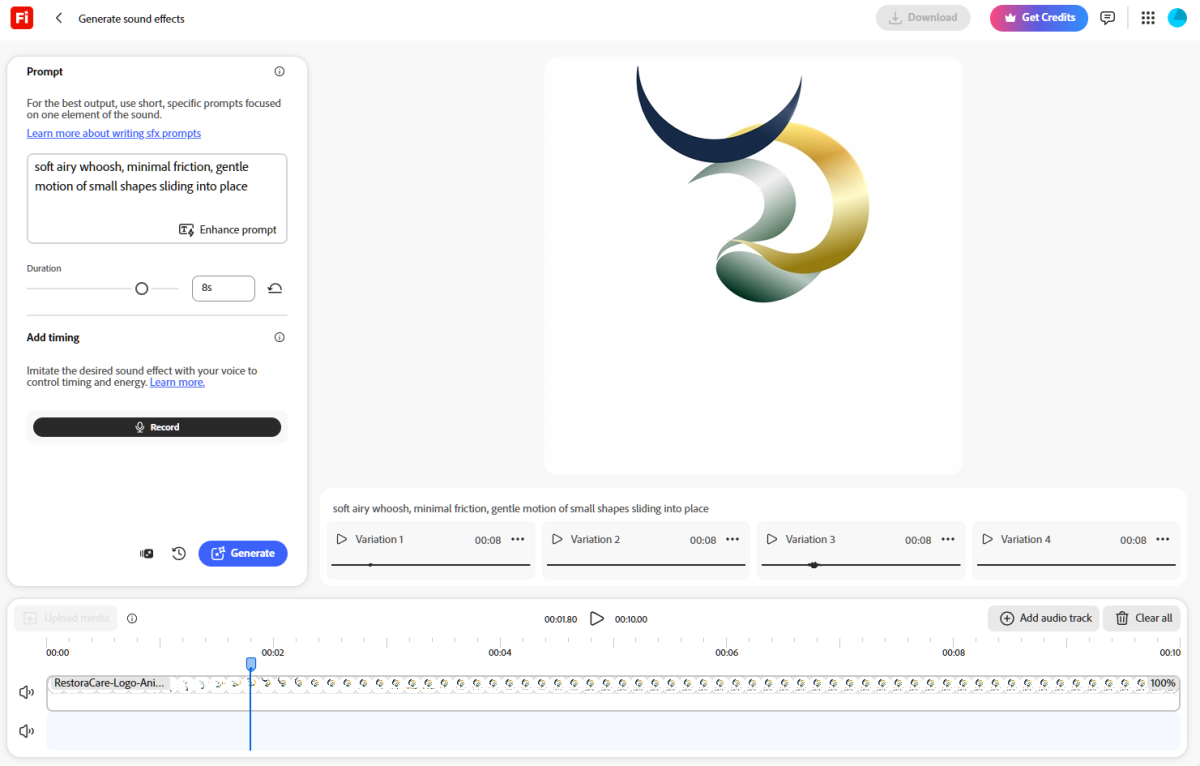
The outputs were abrasive, metallic, and far from the emotional tone I wanted. The logo animation itself was soft and intentional — pieces of a symbol gently sliding together to form an “R.” But the sound Firefly produced felt disconnected from that motion. Too sharp. Too mechanical. Too loud.
I tried several prompts on my own, but Firefly interpreted them in ways I didn’t intend. The system responded, but not in the direction I was aiming for.
The Breakthrough: Voice Timing and Micro‑Prompts
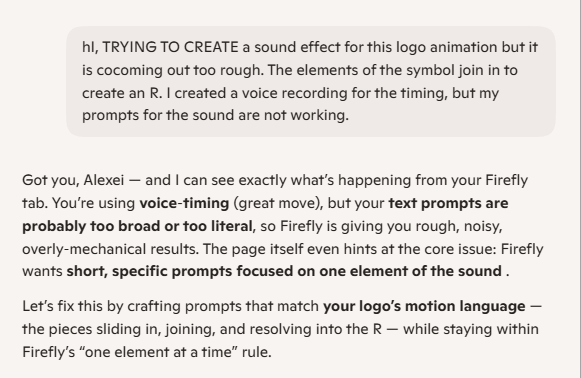
Firefly’s audio generation works best when guided by voice timing — a vocal imitation of the rhythm and energy you want. Once I recorded a soft, breathy timing track, the generative results improved. But the real shift came from refining the prompts.
Instead of broad descriptions (“soft whoosh,” “gentle motion”), the model responded better to micro‑prompts:
- “soft airy whoosh, minimal friction”
- “subtle magnetic pull, smooth tonal swell”
- “clean identity chime, polished and quiet”
Short, specific, texture‑focused language. One element at a time.
This was the key to unlocking Firefly’s potential.
AI‑to‑AI Collaboration: A New Creative Layer
An unexpected part of this process was how another AI — Copilot — helped refine the prompts in ways Firefly could interpret more accurately.
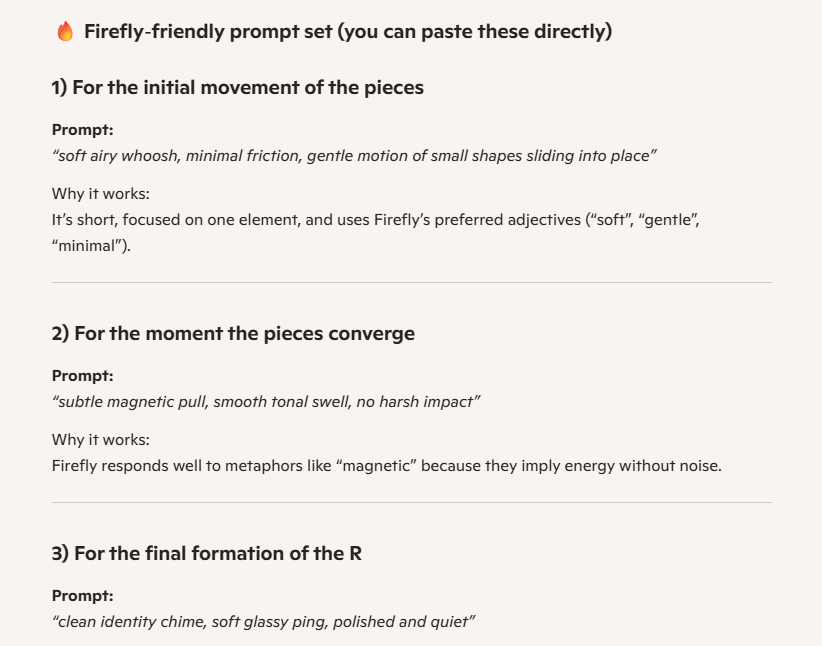
I had tried several variations on my own, but the results stayed rough. When I brought Copilot into the conversation, something interesting happened: the prompts became more structured, more precise, and more attuned to how Firefly processes sound. It was, in a way, AI speaking to AI — one system helping translate creative intent into a form another system could understand.
This collaboration didn’t replace creativity; it amplified it. It showed me that different AI systems have different strengths, and when used together, they can unlock results neither could achieve alone.
The Emotional Discovery: Inhale, Hold, Exhale
Once the sound began to align with the motion, something remarkable emerged.
The soft airy whoosh felt like a gentle suction, an inhale — intriguing, subtle, and inviting. As the symbol pieces converged, the tonal swell created a moment of stillness, a hold. And the final chime became the exhale, a continuation that carried naturally into the company name and tagline.
This inhale–hold–exhale rhythm mirrors the concept of the business itself: advanced wound care.
It became more than a sound effect. It became a sensory metaphor for healing — expressed through motion and sound.
Crafting the Final Audio: Audition and After Effects
With the generative layers in place, Adobe Audition became the space for refinement:
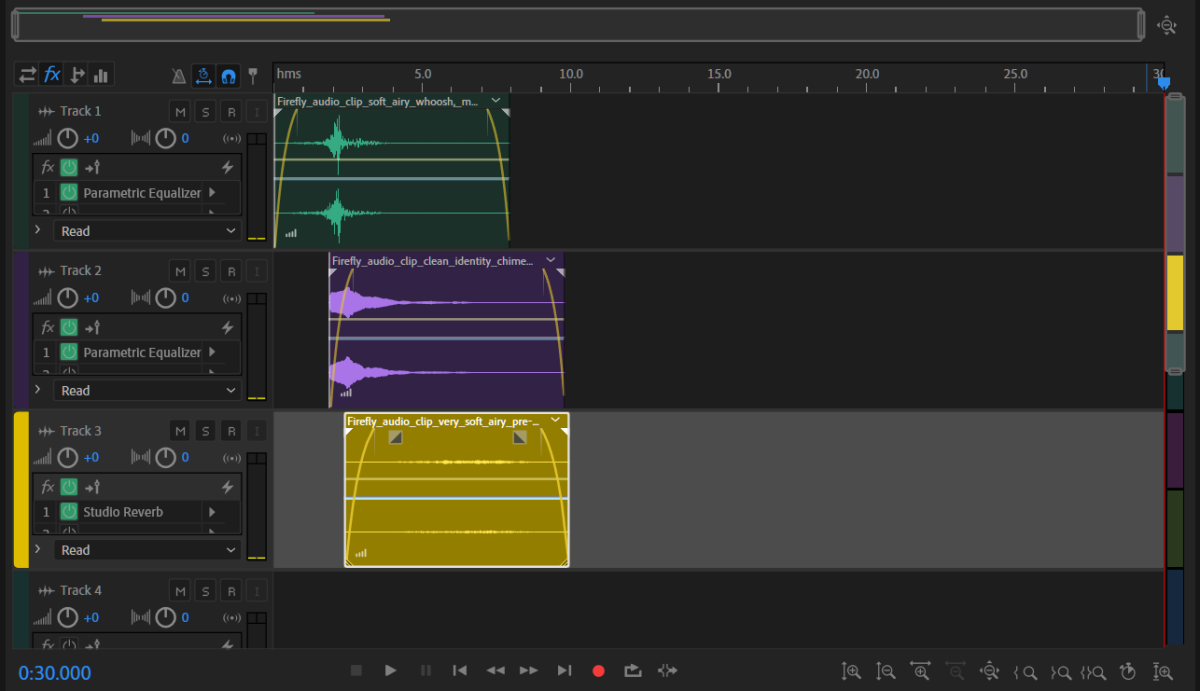
- soft fade‑ins to remove harsh transients
- high‑pass filters to keep the motion airy
- subtle stereo shaping for movement
- a gentle chime sweetener for the identity moment
Then, inside After Effects, the audio found its perfect sync. A slight nudge — just a few frames earlier — made the sound feel responsive and alive, matching the animation’s rhythm with precision.
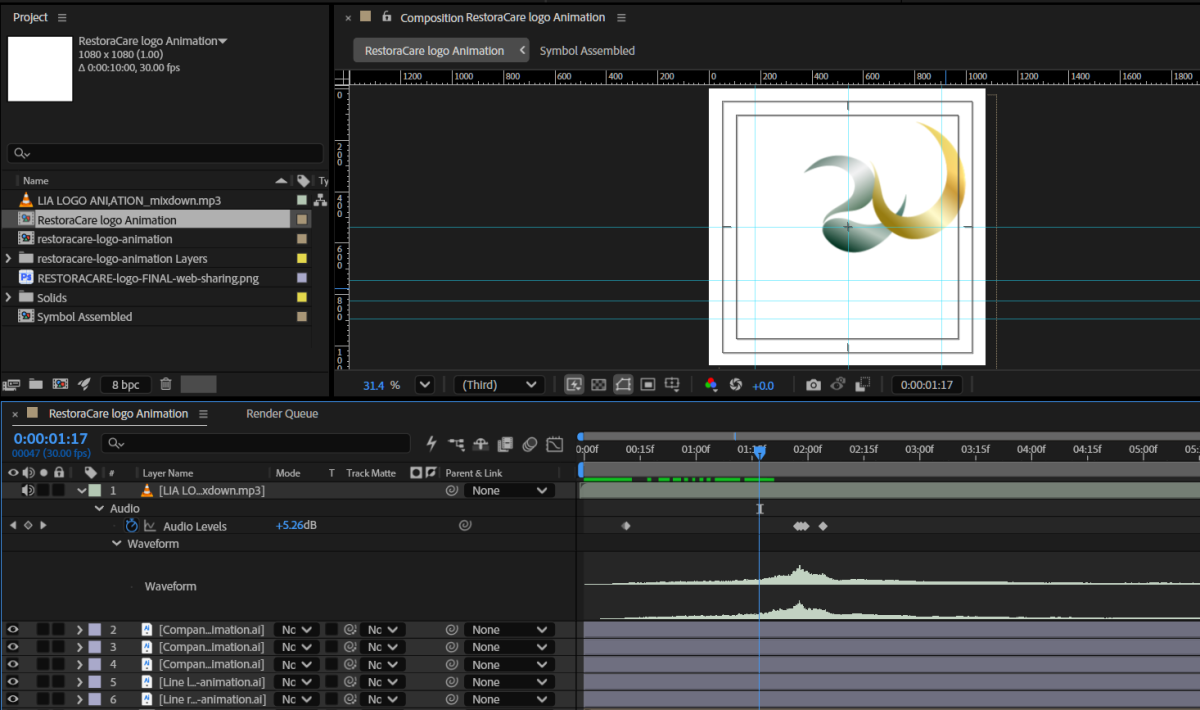
The final result felt wholesome. Soft but sharp. Calm but intentional. A quiet gesture of care.
This project reminded me that design often reveals its meaning through the process, not the plan. A logo animation project became an exploration of breath, healing, and the interplay between motion and sound. And it showed me how AI tools, when used thoughtfully and collaboratively, can open new creative pathways.